I started journalling a few years ago when I changed jobs. Initially it was a way to reflect, it then became a way to keep a record of my achievements and to make sure I was on track with my 30/60/90-day goals. This was when I was a firm workaholic. Journalling soon formed part of my must-do routine.
As I navigated the challenges of a new job and the imposter syndrome that joined me along the way, journalling also became a way to bolster my confidence. I didn’t realise it at the time, but this coincided with the start of perimenopause – which maybe also explains why putting words on paper felt so useful. And even more helpful as I’ve navigated menopause after cancer.
You don’t need to be a good writer
What I love about journalling is that it is a completely personal and private outlet. I don’t need to be grammatically correct; I don’t need to be overly mindful of descriptive language – I just allow myself to write whatever is on my mind. I am far from a creative writer and journalling is most definitely not that, for me anyway. I used to hate the weekly Monday writing exercise at school where we had to rehash our weekends and try to make them sound interesting by punctuating every sentence with a new adjective. It really did put me off writing.
I digress.
Journalling is very different and, although I paused it for a few months when I contended with the shock of being diagnosed with breast cancer, I now rarely go a day without doing it. I have found it essential when managing the anxiety and overthinking – an effect of menopause after cancer (and just menopause) – its been an emotional outlet plus helped me rationalise situations and gain perspective. I’ve also once again turned to it to boost confidence – just logging my successes every night has proved a game changer.
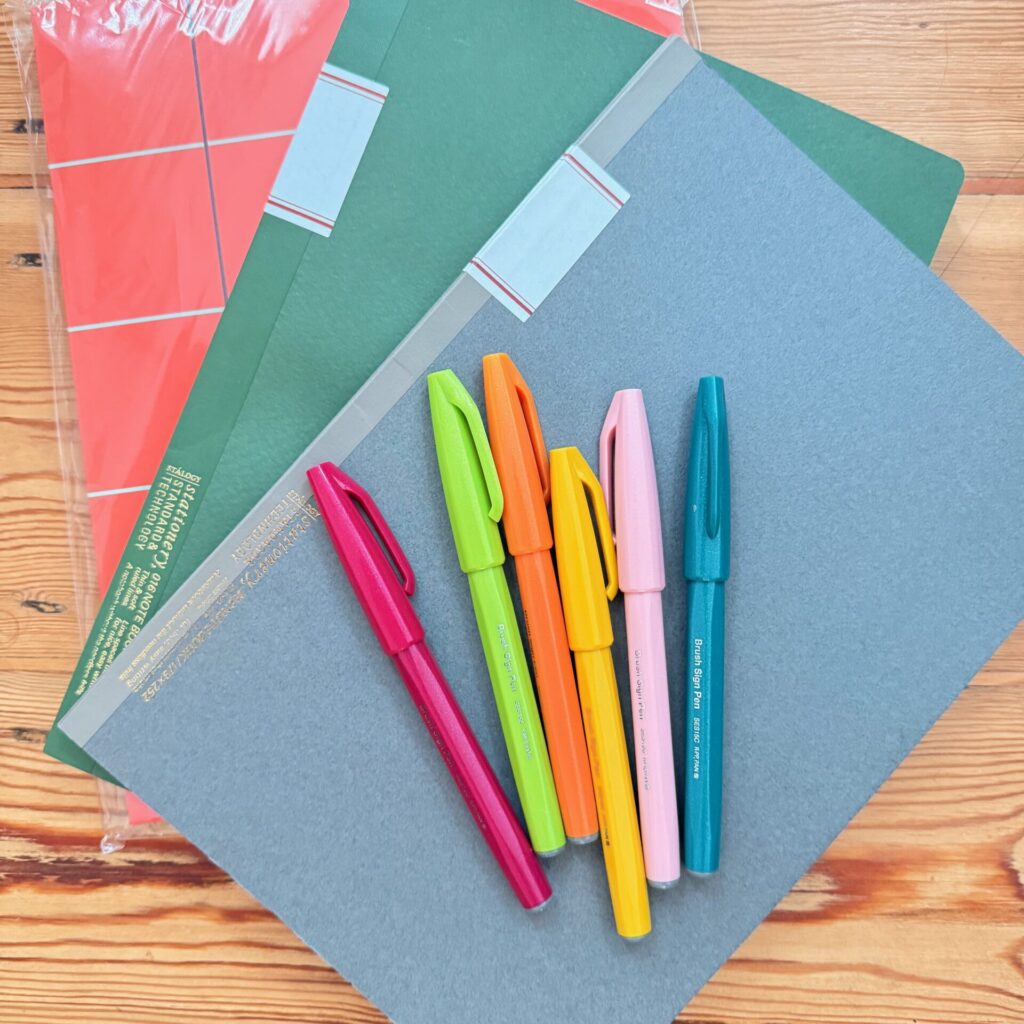
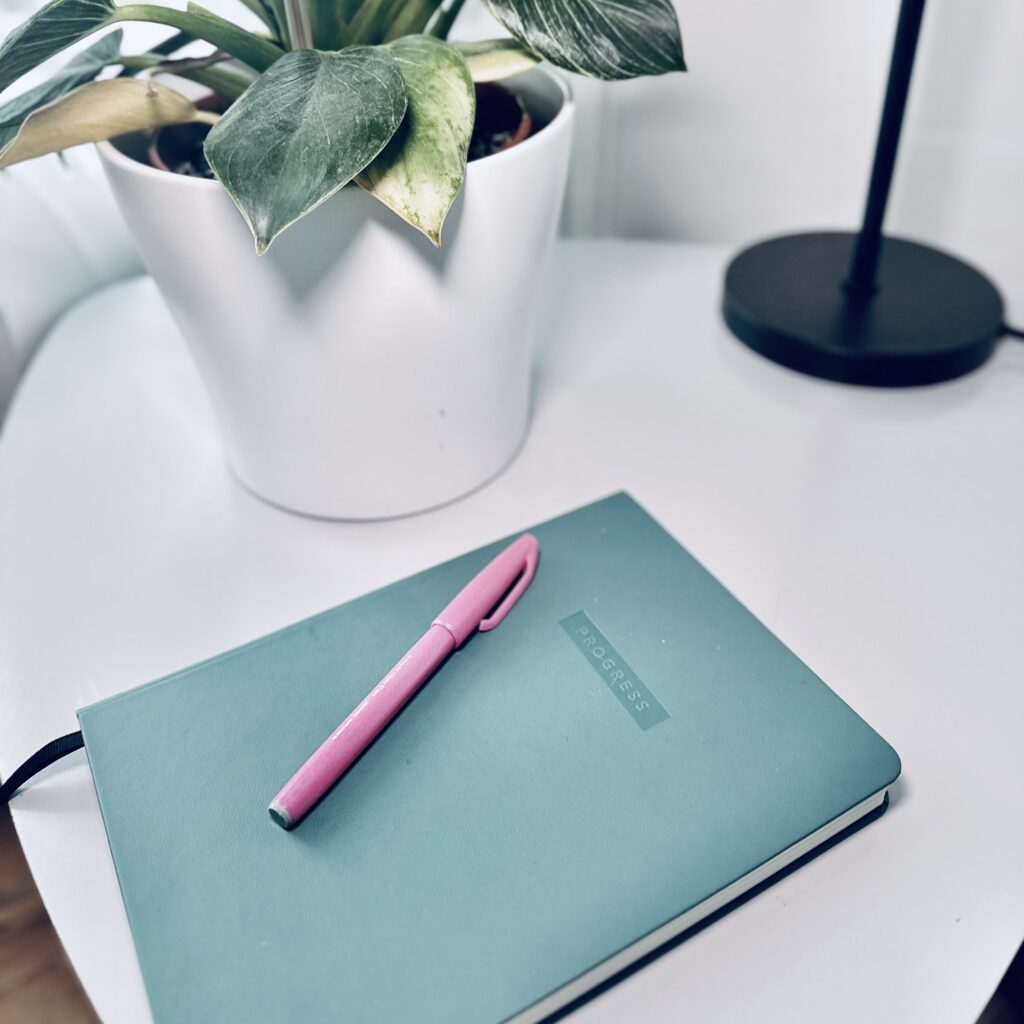
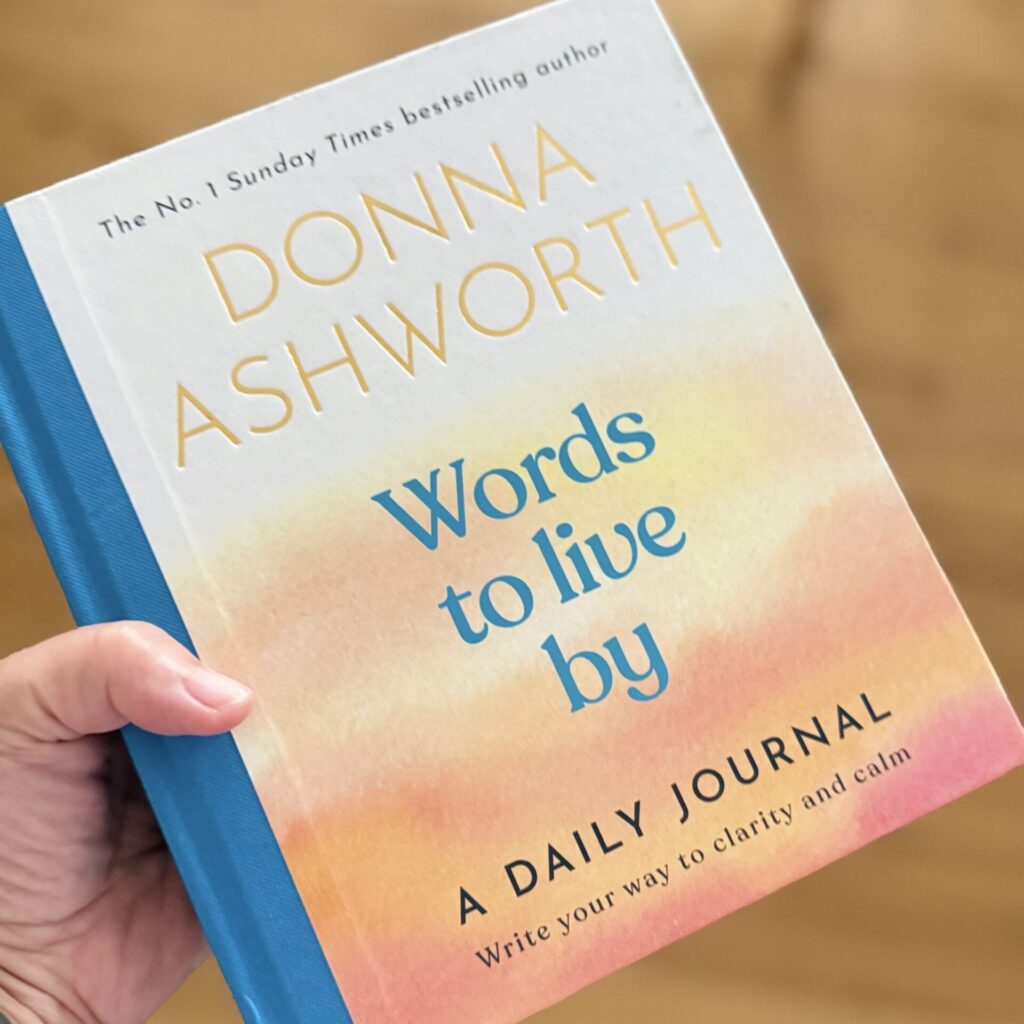
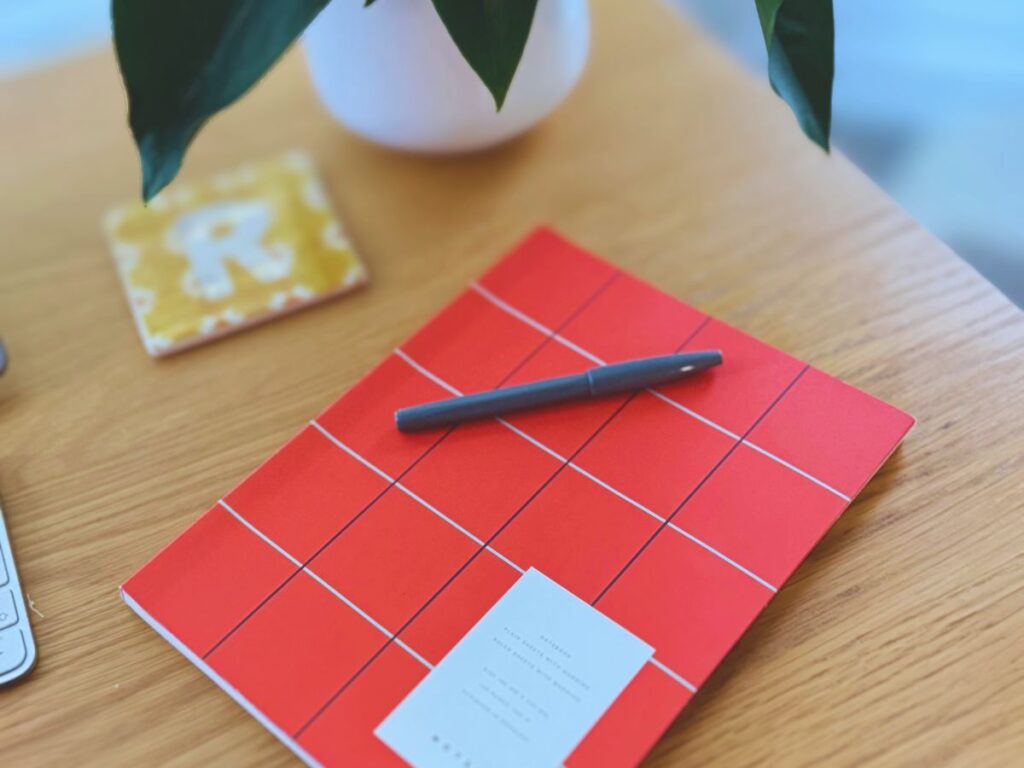
Over the years, I’ve used ready-made journals with helpful prompts – and these are great. I still have a progress journal to keep me on track with some goals and ambitions. I mostly now use a blank ruled notebook (this Notem one is my current fave). Every morning, I list at least 5 things I’m grateful for and then do some free writing where I put on paper anything that is on my mind. Sometimes it might be me looking at the day ahead, others it might be me reflecting on a situation or circumstance.
There are so many benefits
The brilliant thing about journalling is that it can be helpful in so many ways and it has proven benefits. It can be an emotional release for navigating significant life events or just every day situations which have upset you more than normal. It can give clarity and perspective – I find it particularly helpful when I’m overthinking or feeling anxious. Journalling is a good way to document personal growth, do some self reflection and boost self awareness (I’ve done a lot of that over the last few years). It can help manage stress, give you a sense of control when everything else feels out of control and it can be a great way to solve problems. Writing things down can also aid memory.And by celebrating what has gone well or expressing gratitude it can help us adopt a more positive mindset.
I’m a big fan.
If you’ve never thought of journalling – and you feel you’re at that midlife messiness moment, when everything feels a bit out of kilter then it might be something to just help.
Types of Journalling to Try
There’s no right way to do it. Experiment and see what actually helps calm you.
- Gratitude journalling: List 3–5 things you’re grateful for. Simple, quick and actually trains our brains to see the positives.
- Stream-of-consciousness journalling: Set a timer for 5–10 minutes and write whatever comes up. No editing, no punctuation even. It’s a good emotional release and can help stop spiralling thoughts.
- Reflection journalling: Pick one moment or emotion from the day and explore it. What did it mean? What did you learn? Or write down what went well that day and why.
- Goal journalling: Write down what you want to work towards and the steps that get you there. Great for focus.
- Prompts-based journalling: Use a question when you don’t know where to start — “What’s on my mind?” “What do I need today?”
- Bullet journalling: ists, symbols, and quick notes to help you stay organised and focused by capturing tasks, habits, and reflections all in one place.
How to get started and make it stick
01
Just write, don’t perfect – you are not writing a novel, this is for you and there are no rules, there doesn’t even need to be full stops.
02
Use prompts when your mind is blank – ‘what am I grateful for?’ ‘what am I looking forward to this week?’ ‘How do I want to feel today/in a week/in a month?’ ‘what went well today/yesterday?’
03
Start with five minutes and see where it goes. I bet you make it to 10 mins easily!
04
Try different formats – some journals have been created to help goal set or make a change and these will usually have prompts. Some may have a morning and evening reflection. You could even doodle. Just try a few and find out what works for you.
05
Make it easy and build it into another habit – 5 mins with a morning coffee works best for me, but it might also form part of a bedtime routine (sometimes helpful for getting worries out before sleep).