It’s just over three years since I was placed into medical menopause as a result of my cancer treatment.
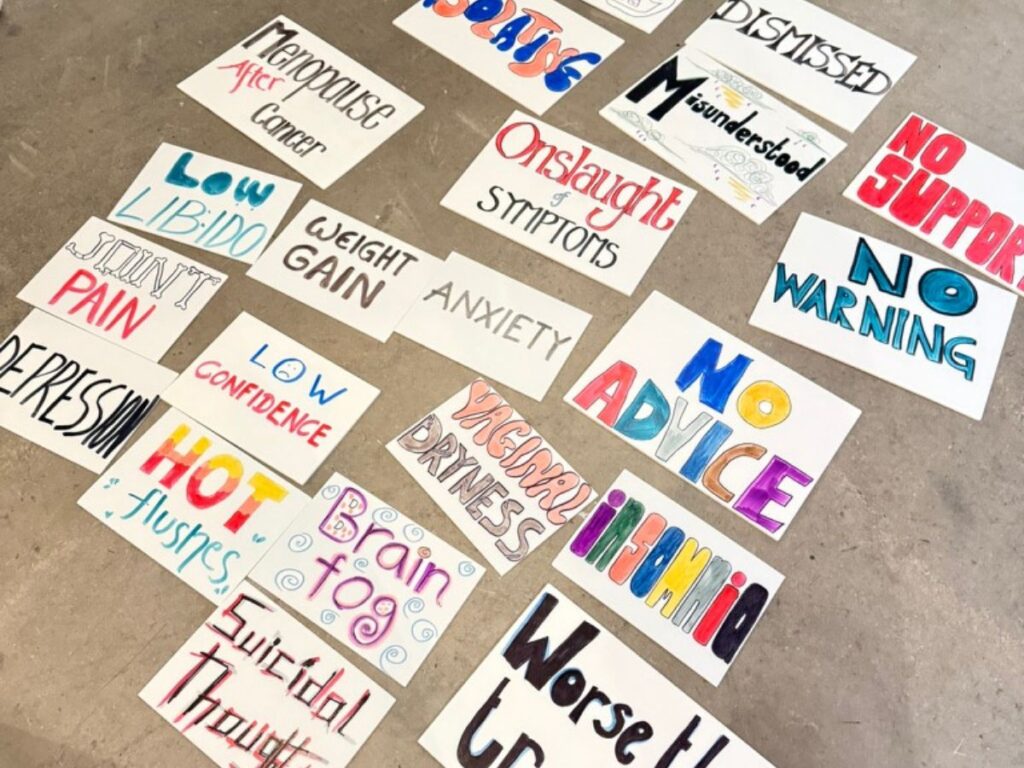
My ovaries were suppressed. Shut down. And with that came a sudden, onslaught of symptoms.
Menopause after cancer is one of the unspoken side effects of treatment. It’s rarely talked about, rarely prepared for and more complex to manage.
While it’s commonly associated with breast cancer, it can happen after any type of cancer and at any age. Chemotherapy, radiotherapy to the pelvis, surgery to remove the ovaries, or endocrine treatments can all trigger it. Yet during cancer treatment, it’s often barely mentioned.
A ‘Crash’ Menopause
Unlike a gradual transition, menopause after cancer has a more abrupt onset. Its often referred to as the ‘crash’ menopause. The symptoms can be more intense and severe. They linger, resurface, or change over time. That has definitely been my personal experience too.
I had very little warning. Aside from a brief and very different brush with perimenopause, I wasn’t prepared for what was to come.
I was prescribed an ovarian suppressant alongside chemotherapy. I knew I’d continue the treatment after chemo ended. I was told I might experience “a few hot flushes.”
What followed felt more like an internal inferno, flaring multiple times a day and that was just one of many symptoms. Brain fog, anxiety on anxiety, sleep issues, stiff joints. Underexplained would be an understatement.
I thought that was bad enough. Fast forward 2 years and add in an aromatase inhibitor, symptoms worsened (which I didn’t think was possible). These drugs are designed to eliminate oestrogen almost entirely from the body, something many of us don’t realise plays an extraordinary role in how we feel, function, and live. Physically, mentally and emotionally.
I’ve heard menopause after cancer described as “brutal” and even “harder than the cancer treatment itself.”
Sadly, I think thats a fair description.
It Can Feel Never Ending
3 years on, I am still navigating menopause after cancer.
I have been lucky. I found Dani Binnington and Menopause and Cancer, a not-for-profit which I am now a director of. Menopause and Cancer exists to inform, empower and support people like me through a vast array of services – podcast, blog posts, workshops, support sessions, even healthcare professional training.
As an organisation, Menopause and Cancer launched the first World Menopause and Cancer Awareness Day, reaching millions and calling for change. And will keep calling for change so that menopause is part of the conversation and ongoing treatment and support for people who are pushed into this as a result of cancer treatment.
That change can’t come quick enough in my opinion.
But alongside systemic change, I’ve also come to realise that personal change matters. And mindset matters too. While I can’t control everything about menopause after cancer, there are things I can do to help myself navigate it.
What follows isn’t a prescription. I’m not a medic. I’m not an expert. I do advise you seek help from your healthcare team as a first step. Here, in this post below, I’m simply sharing what has helped me beyond the care of my medical team and the actions I’ve personally taken.
My experience, my risks, and my choices may look different to someone else’s and that’s so important to say.
Take what resonates. Leave what doesn’t. I hope it helps.
01
Information
It is so powerful to both know exactly what is happening in your body, tracking symptoms, being aware of changes physically and emotionally and to know why symptoms occur.
Do your research – learn about the medicine you’re prescribed, the possible side effects and the impact it can have on your long-term health.
Its also useful to know what options are available to treat symptoms from a lifestyle perspective, through complementary therapies and also medically.
Building this knowledge and learning what options are available has helped me feel more in control, make changes personally but also be better able to advocate for myself when speaking with the professionals.
Buy this book – Navigating Menopause After Cancer – it has all you need.
02
Mindset
Whilst I’m grateful to have access to medication to reduce my risk of cancer, I’ve at times been angry and frustrated about being on long-term endocrine therapy. But I’ve learned that if I let those feelings dominate, they only make me feel worse. So instead I try to adopt a positive and action oriented approach to managing symptoms.
I’ve focused on what’s within my control.
For me, that means tracking my symptoms, noticing patterns, and adopting self-care strategies that work for me
03
Movement
If you’ve read my blog before, you’ll know movement is medicine in my opinion and you’ll also know I’m a fan of running. However, simply going for a walk, doing 5 mins of stretching or yoga is so good. And I love a bit od a dance too. For me exercise is a stress reliever, it helps me reduce anxiety and clears my head. And I also know there are other benefits for my heart health, bones and brain too.
Plus exercise is known to reduce a risk of cancer recurrence
04
Nutrition
I’m not perfect. As much as I’d love to never eat ultra-processed food again, that’s not always realistic. What I do try to do is choose nourishing foods that help keep my blood sugar balanced, without being too restrictive.
I do still love a chunk or 2 of Tony’s Chocolonely
I have enjoyed trying recipes from these books – Hungry Woman by Pauline Cox and The Natural Menopause Method Cookbook by Karen Newby
And I signed up to a vegetable box subscription to encourage me to try new veggies.
05
Fun
This one matters the most. Joy, laughter, creativity, silliness – whatever it is, I think its important that we prioritise this as much as possible.
My idea of fun sometimes might be knitting a new jumper, it can be trying a new recipe or it could be catching up with friends on a walk or on the dance floor. Sometimes its even just reading a book. Doing whatever makes us happy is good.
06
Community
Finding people who get it, who understand menopause after cancer without explanation, has been so cathartic. Sharing experiences, frustrations, tips, all makes this feel less lonely and me feel more supported.
Menopause and Cancer are now running community support session across the country – find one near you here.
You can find all of the services Menopause and Cancer offer here.
And below are some of the products I’ve used and enjoyed – to see more, visit my product links page.