If you have read my blog before, you know I am a glass half full kind of person. Positive to a fault even. So let me start there. I am grateful. Deeply, genuinely grateful to have survived cancer. Twice. To have had good care. To be here writing this.
Right. Now that is out of the way, can I be really honest with you?
What I’m struggling with, and I mean really struggling with, is the medical menopause. The part of the cancer treatment, that no one talks about. The bit that goes on for years but is no longer described as ‘active treatment’. I personally don’t know what’s not active about taking a drug daily coupled with a quarterly injection but…
The drugs that are a way to reduce risk of recurrence – note – reduce not prevent.
I feel so frustrated. Angry even. That I’m doing most things right (its hard to be 100% perfect) and I feel utterly sh*t. I’m cancer free and some days feel worse than when I was in ‘active treatment’.
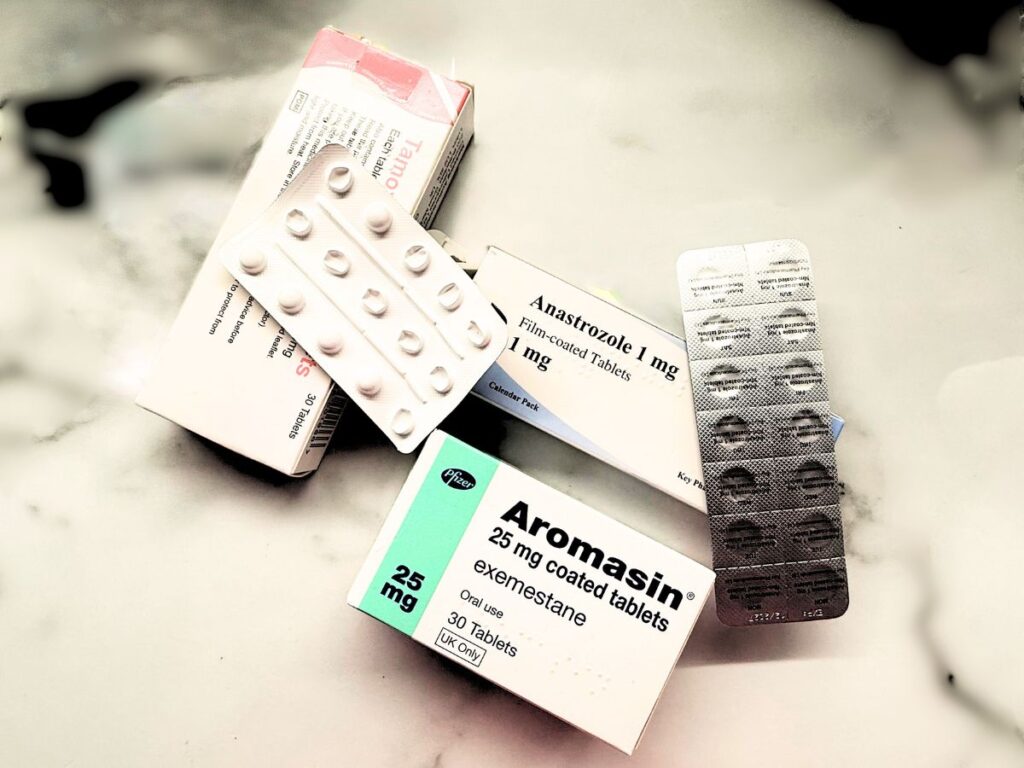
I’ve been on ovarian suppressants since the start of 2023. And then on aromatase inhibitors since 2024 – for 2 years. I explored everything I needed to know about them. About menopause after cancer. So much so I’m now part of a wonderful organisation Menopause and Cancer which supports others like me with expert let information. But that doesn’t stop me from experiencing the struggle.
Fatigue that feels like its physically holding me back. I often feel like there is an invisible force reigning me in, holding on to the back of my shirt, a bit like a toddler held on reigns.
Sleep that is so inconsistent. I feel angry every time I read something about the longevity benefits of sleep – I F**KING know this, its not helpful when you can’t actually sleep a full night without being up either for the loo, a drink – or due to my most recent side effect – a midnight snack.
The weight gain – ok I know I am small, but I am the heaviest I have ever been. As soon as I start to think about dieting I put on more weight. I try to eat well, get enough protein and fibre (all the craze atm). It doesn’t stop me from waking up super hungry at night. And night time is not the best to rationally pick sensible snacks. (I’ve eaten a lot of chocolate!)
On top of this, I have learned I have high cholesterol. Its like a kick in the teeth – and another thing to worry about. As if the fear of cancer returning wasn’t enough! I am not exactly the person you picture when you think high cholesterol. I do not eat fried breakfasts daily or live a sedentary life. And yet here we are.
And do not even get me started with the anxiety, catastrophising and overthinking. Its off the scale at times. I’m learning how to quieten the little fear buddy, the voice that pops into my head bringing doubt and disaster. But its not easy.
I am not writing this for sympathy. I genuinely am not. I am writing this because I know I am not the only one lying awake at midnight, maybe also eating chocolate at ungodly hours, and wondering why nobody warned them about this bit AND if I can get through the next 8, yes 8, years of this.
I have clearly not cracked this. Some days are effortful, hard and no amount of positive thinking fixes a sleepless night or a hip that aches before you have even got out of bed. But I remain determined not to be defeated by it. To learn everything, try everything I can (within my own personal boundaries) to live and feel better.
If this is you too, then I hope some of the things below help:
01
Move Gently. Move Consistently. Just Move
Fatigue or Joint and hip pain can make exercise feel like the the last thing you want to do, but gentle movement is one of the most evidence backed ways to ease aromatase inhibitor related joint pain and help reduce fatigue.
This does not mean pushing through a HIIT class. Think walking, swimming, yoga or stretching. Even 20 minutes a day can make a meaningful difference to stiffness. The key is consistency over intensity. Plus exercise is has been found to reduce risk of cancer recurrence.
02
Take Your Cholesterol Seriously
Aromatase inhibitors can raise cholesterol levels, menopause without the medicine can raise cholesterol. This is because oestrogen previously helped protect your heart by helping the liver process cholesterol, keeping LDL (“bad” cholesterol) low and HDL (“good” cholesterol) high. A decline in oestrogen removes some of that protection.
Get your levels checked regularly, talk to your GP about lifestyle or dietary changes or other options, and do not let this one slide. It is easy to focus on the cancer, the other more obvious menopause symptoms and forget that your heart needs attention too.
03
Protect Your Sleep But Remember Rest Counts Even When Sleep Does Not Come
Disrupted sleep on aromatase inhibitors is extremely common, often driven by night sweats, anxiety and joint discomfort. There a whole host of strategies we can try – like keeping room temperature cool, avoiding screens and building a wind down routine. Even then sleep can be evasive. One of the things I like to tell myself when I can’t sleep is that if I feel rested and calm, that is good enough. Oh and I like counting backwards from 1000, it works…..zzzzzz
04
No, You Are Not Losing Your Mind
The drop in oestrogen caused by aromatase inhibitors directly affects the hormones that regulate mood and stress response. If you are spiralling over small things or feeling disproportionately anxious, this is a recognised side effect, not a personality flaw or weakness. Talk to your GP. Options like CBT, lifestyle adjustments or reviewing your medication are all worth exploring. You do not have to suffer your way through it.
05
Keep Talking to Your Medical Team. Advocate For Yourself, Even When It Feels Uncomfortable
Many women quietly endure side effects because they feel grateful to be alive, to have access to medication and do not want to complain. But your quality of life matters enormously. There are sometimes alternative aromatase inhibitors that may suit you better, or other medical options to help manage side effects. You are allowed to say this is hard. You are allowed to ask for help.
I wish it didn’t, but it might require advocacy, courage and persistence to get that help. Your team should know what you are dealing with its their problem as well as yours, in my opinion.
06
Find Your People
Probably one of the best things you can do is find your people. There is something super cathartic about talking to someone else who gets it. Who understands what you are going through.
The non-profit Menopause and Cancer has been invaluable to me personally. Through its services, providing expert information, I have gained knowledge. And even more beneficial, I have found huge support from others in the community.
You do not have to work this out alone. None of us should have to.
If you are reading this and nodding along, this bit is for you (and its a reminder to myself too).
You are not weak for struggling. You are not ungrateful for finding it hard. You are not dramatic for feeling like your body has been taken over by a stranger who does not sleep properly and seems unable to get through the night without chocolate.
You are navigating something that no one prepared you for. You are navigating something that you are often left to work out for yourself.
You are someone who deserves support, information and the occasional reminder that you are not alone in this. I hope this post gave you a little of all three.
And on the hard days, remember that Kylie has been through it too and she is still out there Spinning Around, absolutely smashing it.
So are you.
For help and support visit: menopauseandcancer.org
Small disclaimer: we may earn a teeny commission if you buy something from any affiliate links on our site.